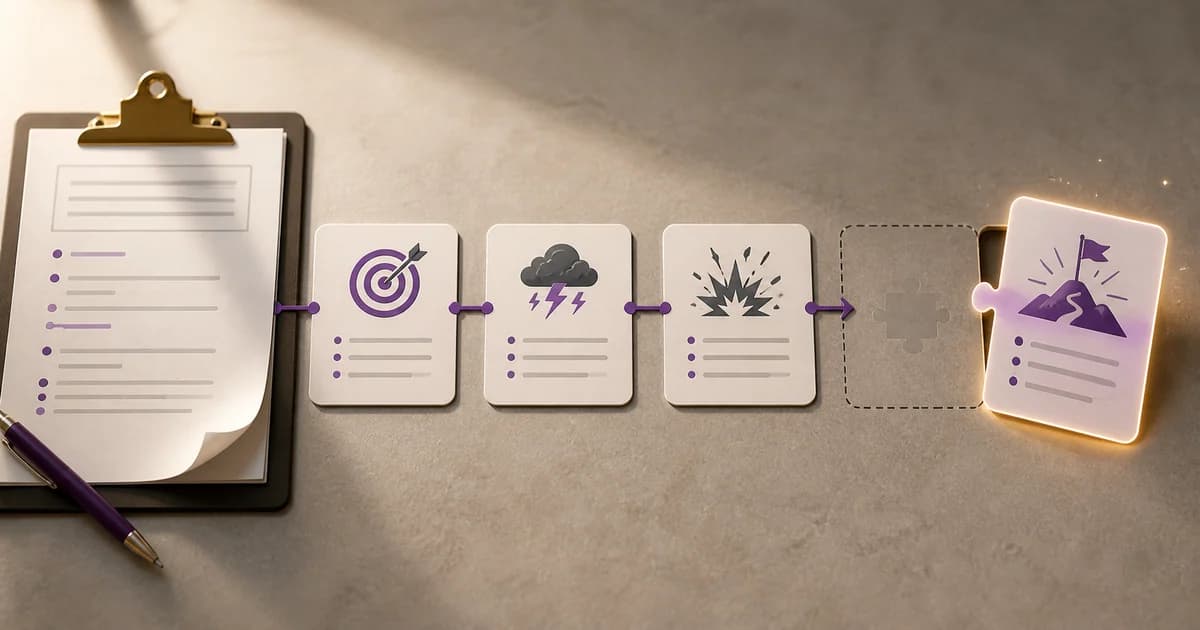
A web novel synopsis for submission is a planning document that compresses everything from the story's one-line hook to its ending. Through this document, editors grasp what the protagonist wants, what conflict drives the story, and where the main events converge.
In the Korea Creative Content Agency's 2025 Web Novel IP Practical Class, the logline, full story synopsis, and four-act plot structure were also treated as a single planning and structuring process. The focus was also on designing characters and worldbuilding to work organically within the story's events. Before submitting, check the connections between goal, conflict, events, and ending first, rather than the flashiness of the setting.
6 Elements a Web Novel Synopsis Must Show
Scroll the table horizontally to see more.
| Element to Check | What to Confirm in the Synopsis | Signs of Incompleteness |
|---|---|---|
| Planning intent and genre appeal | The reading experience the story offers is explained in one or two sentences | Only the subject matter and genre name are given, with no sense of the story's own direction |
| Story setting | The worldbuilding rules needed for the characters' actions and events are presented | The setting is explained at length but has no effect on the main events |
| Protagonist's goal | It is specific about what the protagonist wants to gain or protect | It stops at broad phrases like survival, success, or revenge |
| Core conflict | The character, condition, or danger blocking the goal is clear | The obstacle keeps changing partway through, making the central conflict hard to identify |
| Main events and turning points | Choices and results connect, and the situation changes step by step | Episodes are only listed in chronological order |
| Climax and ending | The final choice, the resolution of the conflict, and the character's change are presented | The summary ends right before the final confrontation, or the ending is hidden |
These six elements don't exist separately. The setting creates the conditions for conflict, conflict demands a choice from the protagonist, and that choice should bring about the next event and the ending.
How to Check Cause and Effect in a Web Novel Plot
When checking the plot structure, ask "so what changed because of this?" between each event. If the next event would happen the same way even after deleting the previous one, the link between them is weak.
Does the Core Conflict Begin in the Setup?
The opening needs an event that changes the protagonist's daily life. This event should either create a goal or set up a situation where an existing goal must be pursued immediately.
- Is it clear why the protagonist gets involved in the event
- Is what's lost on failure specific
- Does the early event lead into the story's overall core conflict
- Does it include a scene that shows the genre's expected appeal
If the protagonist is pulled along passively after getting caught up in the event by chance, the goal can become blurry. Write out what decision the protagonist makes after the event too, so the starting point of the plot is clear.
Do the Midpoint Events Escalate the Conflict?
For the middle section, look at the size of the change rather than the number of events. Each time a new enemy, piece of information, or shift in relationships appears, the protagonist's options should change and the stakes should grow.
Organizing the main events with the following sentence structure makes it easier to check cause and effect.
The protagonist chooses A for the sake of the goal. As a result, B happens, and in trying to resolve it, they run into a bigger conflict, C.
If this structure keeps breaking down, reinforce the cause and effect between events. In particular, a sudden solution from a helper, an enemy's attitude changing without explanation, and worldbuilding rules that only apply when convenient can all undermine plausibility.
Does the Turning Point Change the Story's Direction?
A turning point is closer to an event that changes the story's direction than a scene that adds one piece of information. It should involve a change where the protagonist's goal is revised, the enemy's identity is revealed, or an existing strategy has to be abandoned.
Try writing one sentence each for before and after the turning point. If the goal and the stakes in the two sentences are nearly identical, take another look at whether the change is substantial enough.
Is the Climax the Result of Earlier Choices?
At the climax, the protagonist must make a final choice to resolve the core conflict. When this choice draws on abilities, relationships, failures, and information accumulated from the beginning, the plot's structure comes together.
If an ability or character that suddenly appears resolves every conflict, the earlier events lose their meaning. Even just reading the synopsis should reveal a flow of "these were the choices made to reach this ending."
Protagonist Goal and Core Conflict Checklist
You can check the connection between goal and conflict through the following four steps.
- Goal: What does the protagonist specifically want?
- Obstacle: Who or what, and under what condition, blocks the goal from being achieved?
- Choice: What action does the protagonist take to get past the obstacle?
- Result: How does that action change the situation and relationships?
For example, "the protagonist wants revenge" alone makes it hard to predict how events will unfold. The narrative gains momentum only when the target of revenge, the necessary conditions, what must be given up, and the final choice are all revealed.
Checking Whether Character Relationships Affect the Events
For introducing main characters, the role they play in the plot matters more than their occupation, personality, or appearance. Check whether the protagonist's choices or the direction of events also change when a relationship changes.
- Does the helper provide information or opportunities the protagonist can't obtain alone
- Does the antagonist have their own purpose that conflicts with the protagonist's goal
- Is a change in the relationship reflected in the turning point or climax
- Does removing a main character actually leave a gap in the plot
If the story stays the same after removing them, it reads better to either strengthen that character's role or reduce their presence in the synopsis.
Checking Whether the Worldbuilding Functions Within the Plot
Organize the worldbuilding explanation around the rules the events actually need. Information that limits a character's choices or creates conflict, such as regression conditions, the cost of abilities, status restrictions, or contract rules, comes first.
The timing when the setting applies, and its exceptions, should also stay consistent. If a new rule appears only at the ending, the resolution can become less convincing.
How Much of the Plot and Ending Should You Include?
Including the full story synopsis and ending in a submission synopsis conveys a sense of completeness. The Korea Creative Content Agency's training course also presented the full synopsis and the four-act plot structure as part of the process toward completion.
If the ending is hidden, it's hard for an editor to judge how the conflict converges and how ready the work is. You don't need to explain every twist at length, but the following should be confirmable.
- The choice the protagonist makes in the final conflict
- How the core conflict is resolved
- The final change in the main characters' relationships
- Whether the goal set out at the beginning is achieved or changed
- How the emotion and planning intent the story aimed for converge
Even a work planned with series expansion in mind should still resolve the central conflict within the current submission's scope. Even while leaving room for a sequel, it must be clear what gets resolved in this particular story.
Checking the Readability of the Synopsis's Sentences and Structure
It's best to examine the plausibility of the events and the readability of the summary document separately. A past Chungkang College of Cultural Industries web novel contest case also presented the plausibility and cohesion of the story, and the clarity of sentence structure, as separate criteria.
Keeping Only One Change per Paragraph
If a single paragraph jumps between multiple points in time and events, it's easy to lose track of cause and effect. Divide paragraphs by unit of change, such as setup, escalating conflict, main turning point, climax, and ending.
Controlling the Number of Proper Nouns
If a short synopsis is crowded with names of people, places, and organizations, the content becomes hard to follow. Use names for main characters, and it's fine to describe minor characters by role instead. When a proper noun first appears, note its function in the plot alongside it.
Turning Abstract Emotional Statements into Actions
Sentences like "the conflict deepens," "a great crisis arrives," or "fate is overturned" don't show the actual event. You need to write who chose what, and what they lost or gained as a result, so the pacing and the size of the stakes can be judged.
Final Checklist to Judge Whether the Work Is Ready to Submit
Treat any item below that you can't confidently check off as a priority to fix.
Planning and Setting
- [ ] I can briefly explain the story's genre appeal and planning intent.
- [ ] The setting affects the protagonist's goal and the core conflict.
- [ ] The worldbuilding rules and their exceptions stay consistent throughout the events.
- [ ] The logline and the full synopsis describe the same story.
Characters and Conflict
- [ ] The protagonist's goal is specific and confirmed through action.
- [ ] The obstacle blocking the goal and the cost of failure are clear.
- [ ] Main characters have a role and purpose in the plot.
- [ ] Changes in character relationships are reflected in how events unfold.
- [ ] The protagonist's choices trigger the next event.
Events and Ending
- [ ] The opening event leads into the story's overall central conflict.
- [ ] Each midpoint event brings a meaningful change to the situation or relationships.
- [ ] The goal, stakes, or strategy change after the turning point.
- [ ] The climax comes from choices and information accumulated earlier.
- [ ] The core conflict and the protagonist's goal converge at the ending.
Document and Submission Requirements
- [ ] Cause and effect between events can be told apart just from reading the sentences.
- [ ] Low-priority settings and proper nouns have been trimmed.
- [ ] The character setups and events in the synopsis match the submitted manuscript.
- [ ] I checked the required format, length, and attached-manuscript conditions in the original call for submissions.
The last item needs to be reconfirmed every time you submit. In actual cases, requirements varied, some asked for a synopsis in a designated format together with a manuscript of a set length, while others listed the synopsis and manuscript as separate submission items. Don't apply a past contest's standards directly to your current target, prepare based on the most recent call for submissions.
How to Set Priorities for Revision
Rather than fixing every sentence at once, organizing the plot's higher-level structure first speeds up the work.
- Finalize the ending. Decide what choice resolves the core conflict.
- Connect the protagonist's goal to the ending. Compare what they wanted at first with what they gain or give up in the end.
- Place the main turning points. Keep only the events that change the goal, relationships, or stakes.
- Reinforce cause and effect. Write out the reason each event triggers the next one.
- Organize the setting and characters. Keep only the information that actually functions in the plot in the synopsis.
- Polish the sentences. Cut down proper nouns, repeated explanations, and abstract phrasing.
- Cross-check against the manuscript. Confirm that character motivations and main events match the actual manuscript.
If you polish sentences before the ending is settled, the scope of revision keeps growing. Set the story's destination first, then check the connections backward from there. Quite a few gaps turn up this way.
Summary
- A web novel synopsis for submission should carry the planning intent, story setting, protagonist's goal, core conflict, main events, and ending in one continuous flow.
- Check that the web novel's plot connects goal, obstacle, choice, and result, and that the turning point and climax arise naturally from earlier events.
- Right before submitting, confirm that the synopsis matches the manuscript, and recheck the target's latest format, length, and attachment requirements in the original call for submissions.
FAQ
Should I Include the Ending in a Web Novel Synopsis?
Yes. It's better to present the final choice and the ending so the submission editor can judge how the conflict is resolved and how complete the overall plot is.
How Is the Completeness of a Web Novel Plot Judged?
Check whether the protagonist's goal is clear, whether there's cause and effect between events, whether the turning point changes the situation, and whether the climax and ending grow out of the earlier plot.
How Much Setting Should Go Into the Synopsis?
Include the setting that directly affects the protagonist's choices, the core conflict, and how events get resolved first. You can cut back on history or place descriptions that aren't used in the plot.
Is It Okay If the Submitted Manuscript and the Synopsis Differ Slightly?
If the main character's goal, key events, or ending don't line up, the work can look less ready. If the content changed during revision, cross-check the two documents before submitting.
Do All Submission Venues Use the Same Synopsis Format?
The required format, length, and attached-manuscript conditions can vary by organization and announcement. Check based on the most recent original call for submissions from the venue you're submitting to.
Was this article helpful?
Read next