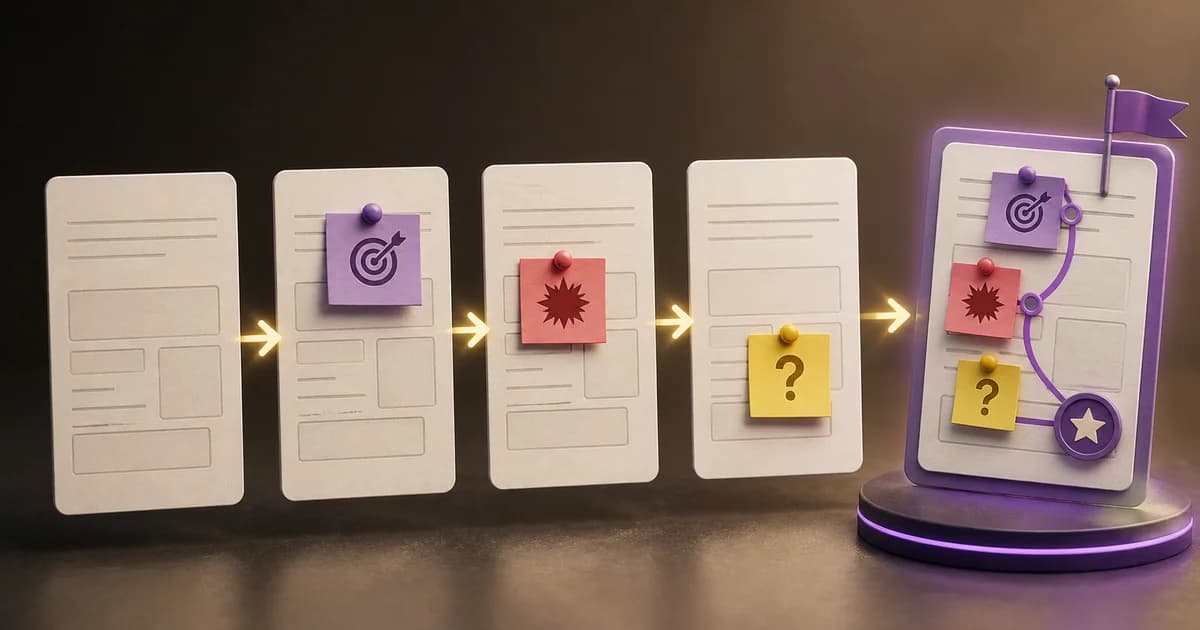
In long-running serialization, remembering and paying off plot seeds at the right time matters as much as planting them well. If a suspicious key that appears in episode 20 is meant to connect to an event in episode 120, the author has to track the key's meaning, how much has been revealed, reader memory, and any changes to the plot along the way.
Foreshadowing is a narrative device that plants the meaning of a later event or piece of information in advance. Plot seeds cover a broader range, including any unresolved information that leaves readers waiting for an answer. So what long-term foreshadowing management needs to track includes both clues the author planted intentionally and information readers are likely to register as an open question.
The management method itself is simple. Give each plot seed its own row and record its first placement, any re-mentions, its planned payoff, and its completion status separately. Then, in line with the episode currently being written, regularly review only the items flagged as at risk.
Where Plot Seed Payoffs Fail in Long-Term Serialization
As a web novel serialization stretches out, a gap opens up between early notes and the current manuscript. Episode order can shift, or a supporting character's role can grow, pushing back the planned payoff timing. This is when the following problems tend to show up.
- The author remembers which episode a clue first appeared in but not exactly what information was shown to readers.
- A payoff scene gets written, but its narrative connection to the early clue never actually shows on the page.
- The payoff target has long since passed, but the status still reads "handle later."
- The same clue gets re-introduced multiple times in different forms, just piling up more unresolved plot seeds.
- It becomes hard to tell apart items where the plan changed on purpose from items that were simply missed by accident.
- The setup feels familiar to the author, but readers haven't seen a re-mention of it in a long time.
Ad hoc notes are useful for capturing ideas in the moment. Once enough episodes have piled up, though, it gets hard to search or sort them by episode number and status. That's the point where foreshadowing notes need to move into a proper management table.
Building a Foreshadowing Management Table: One Plot Seed Per Row
A foreshadowing management table is a single ledger that tracks each clue's first placement episode, current status, re-mention history, payoff target, and completion status in one place. You can use either a spreadsheet or a database tool. What matters more than the tool's name is a structure that keeps each field separate.
Scroll the table horizontally to see more.
| Field | What to Record | Purpose |
|---|---|---|
| ID | A unique identifier number | Avoid confusing similar plot seeds |
| Foreshadowing/Plot Seed Name | A short, searchable name | Fast lookup and categorization |
| First Placement Episode | The episode where readers first saw it | Track how long it's been dormant and check the original text |
| What Readers Know | The clue as it was actually conveyed in that scene | Confirm the actual scope of what's been revealed |
| Actual Answer | The cause or meaning to be revealed later | Check consistency of the eventual payoff |
| Importance | Whether it's a core mystery or a supporting clue | Set review priority |
| Re-mention Episodes | Episodes where the same clue was shown again | Check for gaps in reader memory |
| Payoff Target Range | A target episode range or story arc | Track the payoff schedule |
| Status | Placed, needs re-mention, payoff scheduled, payoff complete, on hold | Filter by progress stage |
| Payoff Episode | The episode where the answer was actually revealed | Compare plan against outcome |
| Connection Review | Confirmation of the link between the early clue and the later event | Prevent marking something complete too early |
| Change History | Reasons for changing the target and the new range | Distinguish planned changes from oversights |
It's worth keeping "What Readers Know" and "Actual Answer" as separate fields. For example, in episode 24, what readers saw might be "the supporting character hid an empty letter," while the actual answer might be "the letter had content that only appears under certain conditions." If the two get mixed together, it's easy to mistakenly think the author has already revealed the answer.
Keep Status Values as a Fixed Set of Options
If status is entered freely, you end up with scattered phrasing like "payoff scheduled," "payoff coming soon," or "next episode." These don't group together under the same filter, which makes it harder to spot anything that's been missed.
In practice, you can fix the status values to something like this:
- Placed: first appeared in the manuscript
- Needs re-mention: readers' memory needs to be refreshed before payoff
- Payoff scheduled: a target range has been set
- Payoff complete: the answer has been delivered and the connection review is finished
- On hold: kept in the current story but the payoff schedule needs to be reset
- Dropped: decided not to use, with the reason and any replacement scene recorded
If you're using Google Sheets, you can use dropdown data validation to restrict entries to the fixed list. This cuts down on inconsistent labeling and lets you reliably apply filters like "rows where status is not payoff complete."
Setting Payoff Timing: Use a Target Range Instead of a Single Episode
Payoff timing is the target episode or story range where each plot seed is meant to gain meaning, cause, or consequence. In long-term serialization, pinning down exactly one episode makes the entire plan easy to throw off whenever episodes get rearranged. Setting a range based on a start and end episode, or a specific arc, makes it much easier to adjust later.
Recording it should look something like this, specific rather than vague:
- Between episodes 145 and 155
- Before the Part 3 finale
- Right before the protagonist's next confrontation
- Within the arc where the supporting character's backstory episode wraps up
When setting a target range, look at the order of first placement, any needed re-mention, and the actual payoff together. If a plot seed needs time for readers to register it as a question, don't reveal the answer right after placing it. If a clue has been dormant for a long stretch, place a brief re-mention before the payoff to refresh reader memory.
When the Serialization Flow Changes, Update the Payoff Target and the Reason Together
If you change the status to "payoff complete" simply because the target got pushed back, actual unresolved items disappear from your review screen. Instead, keep the status at its current stage and update the payoff target range and the change history.
A change entry might read something like "Changed from episode 120 to late Part 3, added one re-mention due to expanded backstory for the supporting character." Recording it this way lets you tell a deliberately postponed plan apart from something that simply slipped through unnoticed.
You don't need to re-read every row every time the current episode moves forward. Start by reviewing items marked "payoff scheduled" whose target range is coming up. For items where the plot has changed, check the following three things.
- Is a new payoff range clearly specified
- Does the longer gap call for an added re-mention
- Does the existing payoff scene still match the cause and effect of the current event
Splitting Episode Management Views: Running a Master Ledger and a Risk List
Splitting a single foreshadowing management table into several review views makes it easier to spot unresolved plot seeds. Rather than duplicating separate tables, it's more manageable to show the same data differently through filters, sorting, and grouping.
Master Foreshadowing Ledger
This is the default view for checking every item and its change history. Use it when registering a new plot seed or reviewing connections between setups. It should let you see importance, first placement episode, and current status together.
Risk List for Payoffs That Are Due Soon or Overdue
This gathers items whose status isn't "payoff complete" and whose payoff target deadline is at or before the episode currently being written. In a spreadsheet, you can highlight rows matching this condition in a warning color.
The condition is: the payoff target deadline episode comes before the current episode, and the status is not payoff complete.
Conditional formatting only surfaces the warning signal, it doesn't automatically judge payoff priority for you. You still need to consider whether readers have already registered the plot seed as a major question, and whether the current story is ready to answer it.
List of Items With No Recent Re-mention
This gathers items with status "placed" but an empty re-mention episode field. If a lot of serialization has passed since first placement, judge whether a natural refresher is needed so readers can still remember the clue.
A re-mention isn't limited to a scene that repeats the same explanation. A scene where readers can recognize an existing clue again through an object, an action, or a character's reaction can be enough. How much exposure is needed depends on that plot seed's importance and its planned payoff scene.
Review Order When Unresolved Plot Seeds Pile Up
When unresolved items build up, it's tempting to just start filling in gaps at random. Instead, find the items that raised the biggest reader expectations and the items that already missed their payoff deadline first. Here's a recommended review order.
- Items that are overdue on their payoff deadline but not yet complete
- Core mysteries readers are likely to have registered as open questions
- Items with a long gap since their last re-mention
- Duplicate clues that overlap in role
- Candidates for on hold or dropped status that are hard to use in the current story
Decide Overdue Items as Payoff, Reset, or Drop
Don't leave an overdue plot seed sitting as is, decide how to handle it. If it can be paid off in an upcoming episode, record a new target range and any needed re-mention. If the current story makes an answer difficult to deliver, record the reason for the change and when to review it next.
Even when dropping a plot seed, it's better not to delete the row. Recording the reason for dropping it and how to handle the existing scenes where that clue appeared helps reduce the chance of leaving meaningless information in the manuscript.
Merge Duplicate Clues Into a Single Narrative Question
You may end up with clues recorded under different names that actually point to the same answer. In that case, pick a representative ID and link the related items together. This prevents the story from stretching out unnecessarily because you tried to prepare a separate answer for each one.
After merging, preserve both the first placement episode and all re-mention episodes. That record becomes the reference for judging whether it was a valid clue shown from multiple angles for the same question, or simply an overlapping repetition.
Marking a Plot Seed Payoff Complete: Confirm Readers Understand the Connection
An event happening doesn't automatically mean the payoff is complete. Readers need to be able to recognize what the original clue meant and how it connects to the cause or consequence of the later event.
Before switching the status to complete, check the following.
- Does it avoid contradicting the clue from the first placement episode
- If there was a long gap, does it include the needed re-mention
- Are the event's cause and consequence both presented
- Is the answer readers were waiting for actually shown on the page
- Have related unresolved items' statuses also been updated
It's safer to treat writing the payoff scene and reviewing the connection as separate checklist items. Right after writing the manuscript, the connection can feel obvious to the author, since the author already knows the whole setup. Re-read the original placement scene and confirm the meaning still holds up before marking it complete.
A Long-Term Foreshadowing Management Routine: Register, Pre-Writing Review, Completion Check
A foreshadowing management table isn't a document you need to fully update every day. It's enough to register new items when a clue is placed, check the risk list when planning the next stretch of episodes, and review connections after writing a payoff scene.
The Day a Plot Seed Is First Placed
Create a new row and fill in the ID, first placement episode, what readers know, the actual answer, and importance. If you can't pin down an exact payoff episode yet, record at least an expected story range. If the target field is left empty, the review point tends to disappear along with it.
When Planning the Next Serialization Stretch
Check the payoff deadline risk list and the re-mention gap list. Pick which items to pay off in this stretch, which ones need a brief refresher, and which ones need their target adjusted. For any changed plan, record the reason and the new payoff range.
After Writing a Payoff Scene
Enter the actual payoff episode and confirm the narrative connection to the original placement scene. If the needed answer has been delivered to readers, check off the connection review and change the status to "payoff complete." If some questions still remain, split off the related item or set a follow-up payoff target.
Choosing a Foreshadowing Management Tool: Spreadsheets vs. Databases
Spreadsheets are good for sorting by episode number and using conditional formatting to flag overdue rows. With dropdowns and checkboxes, you can manage status and completion review in a consistent format too.
Database-style tools are convenient when you want to split one foreshadowing ledger into multiple views and run filters and groups by property. You can also manage payoff targets by date or story range and view them in a timeline format.
Whichever tool you choose, check that it meets the following conditions.
- Can each plot seed be managed as one row or item
- Can status values be fixed to a set list
- Can you filter for unresolved items only
- Can payoff targets and re-mention records be kept separate
- Can you record completion confirmation and change history
What long-term serialization needs isn't a flashy template, it's a structure you can keep updating. If first placement, re-mentions, payoff schedule, and connection review are all visible at a glance, the table is good enough to use.
Summary
- A foreshadowing management table keeps one plot seed per row, recording the first placement episode, what readers saw, the actual answer, re-mentions, payoff target, and status as separate fields.
- Set payoff timing as a start and end episode or story range rather than a single episode, and whenever the plan changes, record the new target along with the reason for the change.
- Review overdue incomplete items and re-mention gaps separately, and only mark something payoff complete after confirming the connection between the original clue and the later event.
FAQ
How should long-term foreshadowing be recorded so nothing gets missed?
Give each plot seed a unique ID and record its first placement episode, what readers know, the actual answer, re-mention episodes, and payoff target range and status as separate fields. You should be able to filter by unresolved status and by target deadline.
When should the payoff timing for a web novel plot seed be decided?
It's best to set an expected episode range or story arc when the plot seed is first placed. If the serialization flow changes, keep the status as is, record a new target range and the reason for the change, and add a re-mention if the gap has gotten long.
What should be checked first when unresolved plot seeds pile up?
Check items that are overdue on their payoff deadline first, then core mysteries readers likely registered as major questions, then items with a long gap since their last re-mention. After that, merge duplicate clues and sort out candidates for on hold or dropped status.
If a payoff scene has been written, is it fine to mark it complete right away?
You should first confirm the connection between the original clue and the later event, the cause and consequence, and whether the answer readers were waiting for is actually shown on the page. It's safer to switch to "payoff complete" only after the connection review is finished.
How should the management table be updated when the payoff plan changes mid-serialization?
Record the new payoff range, the reason for the change, and any needed re-mention plan, without erasing the trace of the original target. Marking a delayed item as complete makes it hard to tell an actual oversight apart from a schedule change.
Was this article helpful?
Read next