As a serial runs longer, published continuity details pile up faster than an author can remember. A left hand injured in episode 12 becomes a right hand by episode 40, a distance that once took three days gets crossed in half a day, and an ability with set conditions activates without explanation. Readers catch these inconsistencies more often than writers expect.
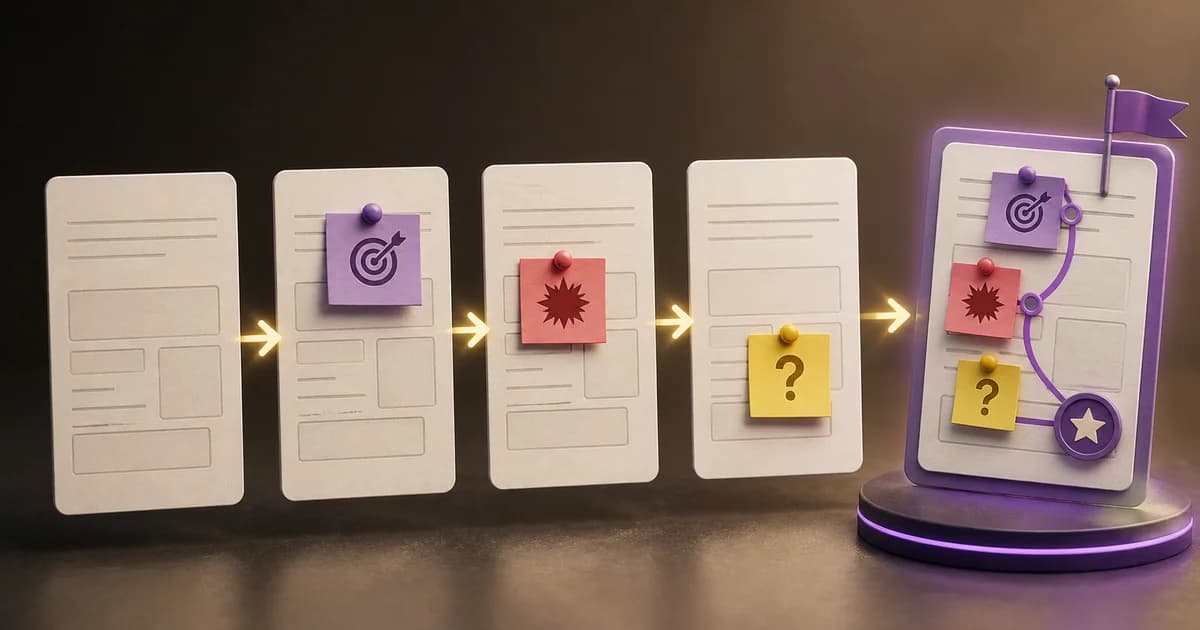
Preventing continuity errors in a long-running serial isn't about memorizing everything. It's a management process: structure the confirmed facts about characters, events, and the world, link each fact to the episode where it was revealed, then compare only what has changed in the new manuscript.
In this system, the final authority isn't the author's story bible but the episodes readers have actually seen. Even if the story bible says one thing, if the work revealed something different, you need to check what readers currently know first.
The Scope of Continuity Errors to Manage in Long-Running Serials
A continuity error is a state where a published fact conflicts with information in the new manuscript without explanation. Changing an internal idea that hasn't appeared in the work yet is closer to a free revision. But once published information changes, you need to check continuity and consistency.
Scroll the table horizontally to see more.
| Error Area | Common Conflicts | What to Check |
|---|---|---|
| Character info | Age, appearance, form of address, abilities, or injury location changes | Character profile and the episode where that info was revealed |
| Character relationships | A character who just met someone acts as if they've known them for a long time | The episode where the relationship formed or changed |
| Event sequence | Travel, battles, recovery, or appointments get out of order | The episode event log and in-story timeline |
| World rules | An exception to an ability's conditions or an institution appears without explanation | The confirmed rule content and its applied cases |
| Character status | Belongings, location, knowledge, emotions, or survival status don't carry over | The most recent status change and the current scene |
| Foreshadowing | A clue that's already been resolved is treated as unresolved | The episodes where the foreshadowing was planted, reinforced, and resolved |
Not all continuity conflicts carry the same weight. A spelling mistake or a wrong name can usually be fixed locally, but an error that changes the causal chain of events, like a culprit's motive or the limits of an ability, affects multiple episodes. As soon as you find one, sort out the scope of its impact first, so the fix doesn't create another conflict.
Step 1: Consolidate Scattered Notes into a Searchable Story Bible
For a long-running serial, a story bible works better as a structure you can search, filter, and sort by entry, rather than one long continuous document. If you separate characters, events, and world rules, and attach common properties to each entry, you can access the information you need quickly.
You can use a database-style tool like Notion, but no specific service is required. A spreadsheet or another record-keeping tool works fine too. What matters is whether you can break information into units, link them to each other, and mark their confirmation status.
Information to Record in Character Profiles
Managing character information doesn't end with keeping the introduction you wrote for their first appearance. You need to keep updating their current status as it changes across episodes.
- Name, nicknames, and forms of address others use
- First appearance episode and last confirmed episode
- Appearance, age, status, and affiliation
- Abilities, their conditions of use, limits, and costs
- Family, ally, and rival relationships
- Current location and belongings
- Injuries, illnesses, and survival status
- Facts they know and facts they don't know yet
- The episode where their status changed and why
- Whether the information has been revealed to readers
If you overwrite "current status" and "the original setting" in the same field, you lose the record of how things changed. For example, if a character's affiliation changes, don't erase the old affiliation, keep it along with the episode of the change and the new affiliation.
Information to Record for World Rules
Managing world settings matters less as a collection of impressive lore and more as a way to fix the standards that get applied repeatedly. If you set up the following fields for each rule, it's easier to judge when an exception comes up.
- The exact content of the rule
- What and who it applies to, and its scope
- The conditions for triggering or taking effect
- Limits, costs, and side effects
- Permitted exceptions and the reasons for them
- The episode where it was first revealed
- The episodes where it was actually applied
- Status: published and confirmed, internally confirmed, or under review
When you add an exception, don't quietly change the existing rule, record it as a separate entry. Also check whether the reason for the exception was explained within the story itself, so readers don't feel like it's a convenient rewrite of the rules.
Separate Confirmation Status from Publication Status
What the author has confirmed and what readers have confirmed can be different in scope. Separating status into the following categories reduces the chance of mistaking a draft idea for a published setting.
- Under review: an idea that could still change
- Internally confirmed: decided as a writing standard but not yet revealed to readers
- Published and confirmed: information presented to readers in an episode
- Under revision: information that may conflict with existing published content
- Discarded: no longer in use, but kept for history
Step 2: Link Timeline and Status Changes with an Episode-by-Episode Event Log
The episode-by-episode event log should be denser than a plot summary but shorter than the manuscript itself. It's closer to an index that lets you check what happened in an episode and whose status or which rule changed.
For each episode, record the episode number, the in-story date or event order, location, characters who appear, the main events, status changes, world rules applied, and any foreshadowing planted, reinforced, or resolved. Link the relevant character profiles and world entries where you can.
Using a database's two-way linking feature, you can find "characters who appeared in episode 35" while also checking, from the other direction, "the episodes where this character's status changed." This makes it easier to trace back to the relevant source episodes when reviewing a new manuscript.
When to Write Episode Records at the Scene Level
For episodes like the following, a one-line summary alone makes it hard to track time and status changes.
- Episodes where events happen simultaneously in multiple locations
- Episodes that cut between flashback and the present
- Episodes where a character's location or belongings change repeatedly
- Episodes where an ability's conditions and results apply in complex ways
- Episodes where foreshadowing reaches different characters differently
In these cases, it's better to break events down into scenes and assign order values. Check the same records as both a table and a list, and if there's a clear start and end point in the story, try switching to a timeline view. This makes it easier to spot time reversals, simultaneous events, and travel time conflicts at a glance.
Mark the Timing of Information Disclosure Separately
What a character knows and what the reader knows can differ. If you distinguish between "when the event happened" and "when it was revealed to readers" in the episode log, it's easier to manage twists and foreshadowing payoffs.
For example, even if the culprit's identity was already decided in the story's past, if it was revealed to readers in episode 80, then episode 80 is the reference point for that published information. You also need to record separately when each character learned that fact, or you risk accidentally creating an all-knowing character.
Step 3: Extract Only the Changed Facts from the New Manuscript First
Checking for continuity conflicts before publishing gets exhausting fast if you just reread the whole manuscript without a clear method. It's more efficient to first pull out the facts that are new or changed in the new episode, then compare them against the relevant records.
Once you finish the new manuscript, extract the following information.
- Characters, places, and objects appearing for the first time
- Newly revealed backstory and relationships
- Changes to a character's location, injuries, belongings, or knowledge
- Newly used abilities and their conditions
- Dates, time elapsed, and the order of events
- Foreshadowing planted or resolved
- Scenes that look like exceptions to existing rules
Enter the extracted facts into the new episode's entry and link them to the relevant characters, prior events, and world rules. Going through this process first makes it clear what needs to be checked.
Step 4: Cross-Check the Story Bible and Published Episodes in Order
Once you've pulled the facts from the new manuscript, check for continuity conflicts in the following order.
First Check: Current Status from the Previous Episode
Start with information that carries over directly, like a character's location, injuries, belongings, emotions, or who they're traveling with. If a door was locked in the previous scene but shows up unlocked in the next episode with no explanation, that one small door can break a reader's immersion faster than any flaw in the grand worldbuilding.
Second Check: Linked Character Profiles and Relationships
Check forms of address, speech patterns, abilities, the scope of a character's knowledge, and any changes in relationships. Errors where a character mentions something they shouldn't know, or recognizes someone they haven't met yet, can only be caught by checking the event log together with the episode where the relationship formed.
Third Check: World Rules and Prior Applied Cases
Don't just look at the rule written in the story bible, check how it was actually applied in published episodes. If the document says "once a day" but there's already a published instance of it being used twice, readers will judge future scenes against that precedent.
Fourth Check: In-Story Time and Travel Routes
The episode number is just the publication order, it doesn't always match the in-story timeline. If there are flashbacks, simultaneous events, or point-of-view shifts, check the event order on the timeline. Reviewing travel time and recovery periods together also helps reduce space and time related errors.
Fifth Check: The Original Text of Published Episodes
Even if the story bible and event log both look correct, check important information against the original text of the published episode. It's possible the management document itself was written wrong. The final basis for preventing reader complaints is the actual published wording, episode number, and publication timing.
Step 5: Fix a Pre-Publication Review Procedure
For web novel continuity management, a repeatable review procedure matters more than the sheer volume of records. If you run through the flow below in the same order for every episode, it's easier to catch what you've missed.
- Extract the added or changed facts from the new manuscript.
- Enter those facts into the episode-by-episode event log.
- Link the relevant characters, prior events, and world rules.
- Check the previous status and the timeline.
- Cross-check against the original text of any published episodes that could conflict.
- Fix any errors, then update the story bible and event log.
- Mark the information as published and confirmed, and note the revision history.
Automated tools can show you linked entries, but they don't always judge the meaning of a continuity fact for you. Questions that need context, like "is it okay for this character to act on knowing this fact," have to be judged directly during manuscript review.
Step 6: Decide the Scope of Fixes for a Discovered Continuity Error
How you fix a serialization error depends on when you find it and how far its impact reaches. If it's caught before publication, just fix the new manuscript and update the linked continuity records. If it conflicts with content that's already published, you first need to decide which episode to treat as the baseline for restoring consistency.
Scroll the table horizontally to see more.
| Situation | First Action | Additional Check |
|---|---|---|
| Only the new manuscript conflicts with the story bible | Fix the new manuscript | Check that the story bible matches the published episodes |
| The story bible conflicts with a published episode | Correct the story bible based on the published text | Check whether the wrong record was carried into other manuscripts |
| A conflict arises between published episodes | Investigate the scope of impact on related episodes and later events | Check the platform's policy on edits and notices |
| Naming or spelling error | Fix the wording and any linked records | Check whether it changed readers' understanding of the content |
| An error that changes event causality or ability conditions | Draft a fix, then review every affected episode | Decide whether to notify readers and revise later manuscripts |
Items to Keep in a Revision Log
During revisions, separate draft changes from corrections to published facts. Use a document feature that tracks changes, and keep the following in a separate revision log.
- The error found
- The published episode and wording containing the error
- The basis for judging the conflict
- The fix chosen
- The related episodes checked alongside it
- The decision date and implementation status
- Whether readers need to be notified
- Whether the story bible and later manuscripts were updated
Without a log, you end up re-investigating later who changed what and why. A feature that lets you review changes in order and accept or reject them is useful when comparing fixes.
When Readers Need to Be Notified
If a revision affects reader interpretation, event causality, a character's motive, or ability conditions, you should consider whether to notify readers. There's no reason to handle a simple typo, which barely affects understanding of the story, the same way as a change to a major setting.
The scope of allowed edits and the notice method for a published manuscript vary by platform. Some services require reupload and preview, or treat major changes as a new edition, but this can't be applied as a common rule across all web novel platforms. Before editing, check the author center, contract terms, and customer support policy of the platform you're using.
Operating Principles for Maintaining a Continuity Error Prevention System
Trying to record every piece of information perfectly and giving up after a few days doesn't last. Consistently linking published settings to status changes lasts longer. Try adopting the following principles as your operating standard.
- Update the current status immediately in the episode where it changes.
- Always link a published fact to the episode that's its source.
- Distinguish between draft, internally confirmed, and published and confirmed.
- Record the conditions and the episode of publication for any rule exception.
- For important conflicts, check the original published text, not just the story bible.
- After a fix, also review its impact on later episodes and foreshadowing.
- Don't assume the scope of manuscript edits or notices before checking the platform's policy.
A management document doesn't write the story for you. Instead, it helps the author focus on a character's current status and event causality without having to pass a memory test. What a long-running serial needs isn't a massive encyclopedia of settings, but a network of records that lets you find published facts and check them against the new manuscript.
Summary
- Turning character profiles, world rules, and the episode event log into linked entries lets you track accumulated continuity quickly.
- Before publishing, extract the added or changed facts from the new manuscript first, then check them against the previous status, the story bible, and the original text of related published episodes, in that order.
- For an error that's already published, check its scope of impact and the platform's policy, and keep a record of the basis for the fix, the decision, and whether readers were notified.
FAQ
What should I record to prevent continuity errors in a long-running serial?
Record a character's current status and relationships, the time, place, and outcome of events, and the conditions and exceptions of world rules. It helps to link each piece of information to the episode where it was first revealed and any episode where it changed.
How should I organize a web novel story bible?
Separate characters, events, and world settings into distinct entries, and attach properties like current status, publication status, and source episode. Any tool works as long as the structure supports search, filtering, sorting, and links between entries.
How do I check for continuity conflicts between published episodes and a new manuscript?
First extract the facts that are new or changed in the new manuscript. Then check them in order against the status from the previous episode, the linked characters and rules, the event timeline, and the original text of related published episodes.
If the story bible and a published episode disagree, which one takes priority?
The published episode that readers actually saw takes priority. Check the original text, correct the story bible accordingly, and also check whether the wrong setting was carried into later manuscripts.
Can I fix a continuity error right away once it's already published?
First check how far the error's impact reaches in terms of understanding events and affecting later episodes. Then check the platform's policies and contract terms on manuscript edits, republishing, and reader notices before deciding how to fix it.
Was this article helpful?
Read next