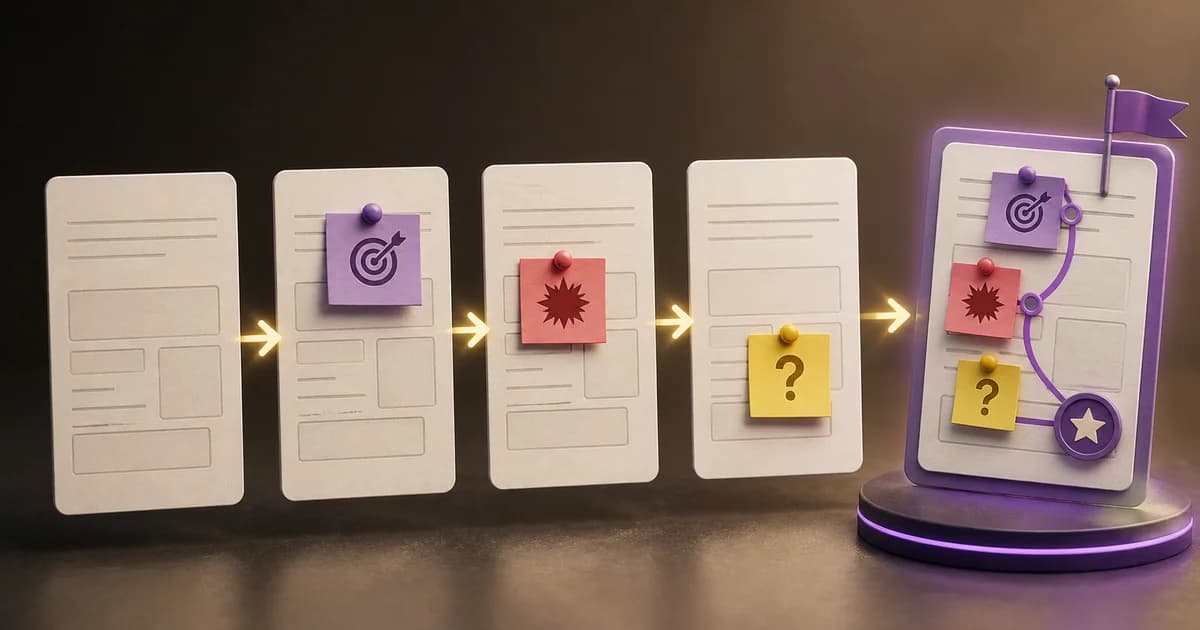
Reader complaints that a long-running serial is dragging don't come only from length. They happen more often when the counterattack, recognition, cleared misunderstanding, or achieved goal readers are waiting for doesn't land on time.
Cathartic payoff timing isn't a technique for ending conflict quickly. It's a design that shows state changes and partial wins while conflict continues, and reliably delivers the promised resolution in the right episode.
In web novel serialization, you have to handle two jobs at once: making readers curious about the next episode and satisfying them in the current one. If you keep postponing every conclusion, fatigue builds faster than tension. If instead you deliver a small payoff and then open a new question from that result, readers get both the pleasure of resolution and anticipation for the next episode.
Check the Payoff Promises First When a Long-Running Serial Starts to Drag
Readers don't wait for every problem in a story with equal weight. They remember, above all, the events the narrative has emphasized, such as punishment for someone who insulted the protagonist, revelation of a hidden ability, or clearing of a false accusation. From the moment these events appear, they become a kind of payoff promise.
The longer the serial runs, the more promises pile up. If you keep adding new enemies, secrets, and subplots without paying back earlier promises, readers won't feel the story has grown richer. Instead, they'll start asking, "So when does that get resolved?"
When Long Episodes Don't Feel Like They're Dragging
If one or more of the following happens consistently, a long-running conflict is easier to feel as moving forward.
- The upper hand in the conflict actually shifts back and forth.
- The protagonist makes a choice and pays a price for it.
- Information or achievement readers have been waiting for gets partially delivered.
- A question opened in an earlier episode gets progress that can be judged.
- A small resolution leads to a bigger enemy response or a new goal.
Even if the confrontation continues in the same location, the story has moved if the terms of negotiation change or the protagonist gains a new means of counterattack. If multiple events just happen while the state of the conflict stays the same, pacing drops off quickly.
Signs That Connecting Episodes Have Turned Into Sagging
If the following overlap in the current run, you can reasonably suspect delayed payoff.
- No new information is added to a question raised earlier.
- The protagonist seems about to make a decision but keeps getting stopped by outside interference.
- Independent subplots keep starting one after another while the main conflict's resolution is still pending.
- Flashbacks and background explanation don't add a means of counterattack or a clue.
- Every episode ending just slightly escalates the same crisis.
- Removing the previous episode wouldn't change the state of the conflict or the characters' choices.
Connecting episodes still need a role. If none of clue, pressure, choice, cost, or partial payoff is present, there's a lot of room to compress or relocate that content.
Cathartic Payoff Development Is a Reward That Resolves Frustration Readers Have Been Waiting Out
Using a powerful skill or defeating an enemy doesn't always create a cathartic payoff. It only feels like a reward when it's directly connected to frustration readers have endured for a long time.
For example, if a falsely accused protagonist wins a battle but the accusation still stands, that gives a battle reward, but the central conflict remains. If what readers were waiting for was public proof of innocence, you need a result that actually moves the false accusation conflict forward, such as securing evidence, a witness coming forward, or a shift in public opinion.
Types of Payoff Readers Notice Easily
- Counterattack payoff: The protagonist, who had been one-sidedly beaten down, breaks the opponent's plan.
- Information payoff: A hidden culprit, betrayal, ability, or piece of the past comes to light.
- Relationship payoff: A misunderstanding is cleared, or trust and recognition are confirmed through action.
- Achievement payoff: A targeted status, resource, skill, or victory is gained.
- Judgment payoff: The result reveals who was right, or which choice held up.
A single conflict can mix several payoff types. Rather than piling all the results at the end, staging them, confirming information, a small reversal, a public judgment, a final victory, helps maintain the rhythm of serialization.
Design Cathartic Payoff Timing Per Episode by Connecting Promise and Payback
No verified common numeric standard exists for how many episodes a reader reward must be delivered within. That's because the pace readers accept varies by genre, the scale of the conflict, episode length, and serialization frequency.
Instead of a fixed number, it's more practical to mark the promise episode, the partial payback episode, and the core payback episode for each conflict. If the same question keeps getting held back with no partial payback in between, delay is likely.
Scroll the table horizontally to see more.
| Conflict Stage | What the Reader Is Waiting For | Change to Deliver in the Episode | Fitting Payoff |
|---|---|---|---|
| Promise | What needs to be resolved | Clearly present the conflict and the loss | Concretize the expected outcome |
| Pressure | How the protagonist will hold on | Narrower options, a cost incurred, a clue gained | Survival, defense, small piece of information |
| Partial payback | Whether the situation is actually changing | Blocking one enemy resource, clearing part of a misunderstanding | Small counterattack, recognition, secured evidence |
| Core payback | Whether the promised result is delivered | Victory, defeat, relationship, or status confirmed | Punishment, proof of innocence, goal achieved |
| Aftermath expansion | What changes after resolution | New goal and cost, bigger response arises | The afterglow of achievement and a new question |
In the Promise Episode, Make the Awaited Outcome Recognizable
A broad promise like "someday they'll grow stronger" also has a fuzzy sense of whether it's ever paid back. Show, in a scene, what needs to change in the current conflict for readers to feel satisfied.
If the protagonist was unjustly expelled, decide whether this particular conflict will handle return, restored honor, or the offender's accountability. Having this standard in place lets the writer distinguish between partial payoff and core payoff.
Place Small Payoffs Within the Buildup Stretch
You don't need to give a big victory in every episode that builds up conflict. What you do need is evidence that things are moving in the direction readers are waiting for.
Even if the protagonist hasn't defeated the enemy yet, the following results count as partial payback.
- Discovering a weakness the opponent had been hiding.
- Recovering part of a resource that was taken.
- Winning the trust of one ally.
- Making one of the enemy's plans fail.
- Confirming who holds the evidence that would clear a misunderstanding.
Small payoffs reduce frustration without ending the central conflict. If the delivered result opens new information or a harder choice, the next episode still has momentum.
Close the Judgment in the Core Payback Episode
If you promised punishment, make it actually happen. If you set up proof of innocence, let the key people learn the truth. If you introduce yet another obstacle at the decisive moment and delay the same judgment again, even the buildup that came before can start to look like delay.
The story can keep going after the core payoff. A victory might mobilize a larger faction, a protagonist who restored their honor might take on a new responsibility, or a reconciled relationship might face a difficult choice. The change after resolution is what creates the next conflict.
Give Cliffhangers and Payoff a Different Job
A cliffhanger can raise arousal, but no experimental result shows it necessarily raises enjoyment or continued viewing intent. That study tested continuous video narrative with 133 participants, so it doesn't directly apply to web novel reader behavior. Still, it's worth noting that withholding every episode isn't a reliable substitute for satisfaction.
At the end of an episode, rather than postponing an already-promised outcome again, try leaving behind a new choice or cost created by a result you've already delivered.
Scroll the table horizontally to see more.
| Episode Ending Design | Reader Experience | Next Episode's Obligation |
|---|---|---|
| Keeps holding off on whether the same attack succeeds | Payoff delay may repeat | Actually judge the question opened just before |
| Reveals the enemy's response after a small counterattack succeeds | Satisfaction and tension arise together | Advance the result of the counterattack and the new risk |
| Chooses how to disclose after securing evidence | Creates information payoff and the tension of a choice | Make the choice, or meaningfully narrow the options |
| A bigger cost appears after the core conflict resolves | Creates new anticipation after a sense of closure | Expand on the resolved result without erasing it |
Split One Question Into Three Parts
When designing a cliffhanger, writing down the following three items can reduce the mistake of postponing the same answer endlessly.
- What question opened in this episode?
- What information or judgment will the next episode confirm?
- What bigger question remains even after that judgment?
Suspense can intensify around a core question where both resolvability and the possibility of delay stay alive. The next episode needs to give real progress on that question for the tension to hold. If you just keep attaching new obstacles to postpone the same answer, the question's power weakens first.
Check Whether Subplots and Flashbacks Contribute to the Main Payoff
Subplot switches and flashbacks can slow down how fast the main conflict resolves. That doesn't mean you have to cut them all. The standard is whether they add a clue, pressure, or a means of counterattack needed for the payoff readers are currently waiting for.
If the protagonist's flashback explains the current enemy's weakness, it advances the core conflict. If a new supporting character's story continues for several episodes without intersecting the main conflict, readers may feel they've drifted further from the payoff they were originally waiting for.
When deciding whether to keep a scene, try applying these questions.
- Does this scene change the protagonist's choice?
- Does it change the information or balance of power in the current conflict?
- Does it provide a means needed for the next counterattack?
- Does it deliver even part of the awaited payoff?
- Would removing it leave a gap in the core payback process?
If the answer to all of these is no, moving the content before or after the payoff, or merging it with another scene, helps the serial's rhythm.
How to Check the Payoff Timing of Your Current Run
First, organize recent episodes by conflict rather than summarizing them by event. Even if a single episode has multiple events, there may be just one central question readers are waiting on.
Step 1: Write the Awaited Promise in One Sentence
Write a sentence with a visible outcome, such as "the protagonist clears the false accusation and publicly restores their honor." A vague phrase like "the conflict gets resolved" makes it hard to distinguish partial payback from core payback.
Step 2: Mark Three Episode Points
Record the following for each conflict.
- The episode where the promise first became clear
- The most recent episode with a partial payback readers could feel
- The episode planned to confirm the core outcome
Don't just count the number leading up to the core payback. Whether a partial payoff existed in between, and whether the same question stayed unchanged, matter more.
Step 3: Check Whether Each Episode Moves Forward
Mark the following three items for each episode.
- Did the state of the conflict change?
- Did the protagonist's choice or cost occur?
- Was part of what readers were waiting for delivered?
If a run of episodes has all three items empty, that connecting stretch likely needs compressing. Conversely, if even one item clearly functions and its result carries into the next episode, that gives grounds to sustain a longer stretch.
Step 4: Prepare a Question to Open After Payback
It's easy to worry that giving a reward will erase anticipation for the next episode. Research suggests that the process of information being revealed over time can itself connect to curiosity and continued exploration. This comes from a picture information search task, so it doesn't directly explain web novel drop-off rates, but it's a useful reference point that providing part of an answer doesn't necessarily end interest.
After delivering a small payoff, keeping one of the following open lets the flow continue.
- An unexpected cost created by the victory
- The newly revealed scale of the enemy
- A choice demanded by the information just secured
- A responsibility that comes with the protagonist's recognition
- A relationship that changed through the resolution process
Delivering a long-awaited punishment or achievement, then opening new uncertainty from that result, fits long-running serialization well.
Final Cathartic Payoff Timing Checklist
Before publishing a manuscript, pick one conflict and check it against these points.
- Can you explain the outcome readers are waiting for in one sentence?
- Was there at least one partial payback after the promise?
- Are you postponing the same question by only adding new obstacles?
- Does the core payback episode close the judgment on victory, defeat, or the relationship?
- Does the cliffhanger avoid canceling out the payoff from the previous episode?
- Do the subplots and flashbacks add something needed for the current payoff?
- Does each episode have at least one of a state change, a choice and cost, or a partial payback?
- Does the change after resolution lead into the next question?
If you get stuck on several of these, it's better to reset where the promises and paybacks sit before adding more events. Readers aren't people enduring a long story, they're people following a story that keeps moving forward.
Summary
- A long-running serial feels like it's dragging less because of total episode count and more because promised counterattacks, resolutions, and achievements keep getting postponed without partial payback.
- For each conflict, mark the promise episode, the partial payback episode, and the core payback episode, and leave a state change, choice, or reward in each episode.
- Use cliffhangers to deliver an already-awaited result first, then open the new question and cost created by that result.
FAQ
Within how many episodes should reader payoff be delivered in a long-running serial?
There's no verified fixed episode standard that applies to every web novel. Instead of counting episodes, check how long the same question stays on hold without a partial payback.
Won't frequent cathartic payoff development weaken the conflict?
A small payoff doesn't have to end the entire conflict. As long as the result changes the state, such as securing a clue, a small reversal, or partial recognition, and opens a bigger response, tension can hold.
How do you tell a cliffhanger apart from delayed payoff?
If the next episode gives judgment or progress on the question from the previous episode, it functions as a cliffhanger. If the same answer keeps getting postponed by interfering events, it's closer to delayed payoff.
Is it okay to add subplots while building up the main conflict?
You can use them if they provide a clue, pressure, or a means of counterattack needed for the current payoff. If an independent subplot that doesn't intersect the main conflict continues for several episodes, the resolution pace can feel slower.
After delivering a payoff, how do you build anticipation for the next episode?
Leave the change after resolution as a question, such as the cost of victory, a new enemy response, or a choice demanded by information just secured. You can deliver the satisfaction you already promised while still opening the next conflict.
Was this article helpful?
Read next